WHAT really is in the Hiri Moale Festival in Port Moresby?
THE HIRI TRADE
This Trade expedition was between the Motuan and the Erema (Gulf) people in the Gulf of Papua. This is a form of barter trade where the Motuans traded Clay Pots for Sago with villagers along the Gulf coastline.
The Motuan (men) sail westwards during the south-easterly winds known locally as the "Lahara winds". After the trade, they return when the winds changes eastwards. These winds are called the "Laurabada winds".
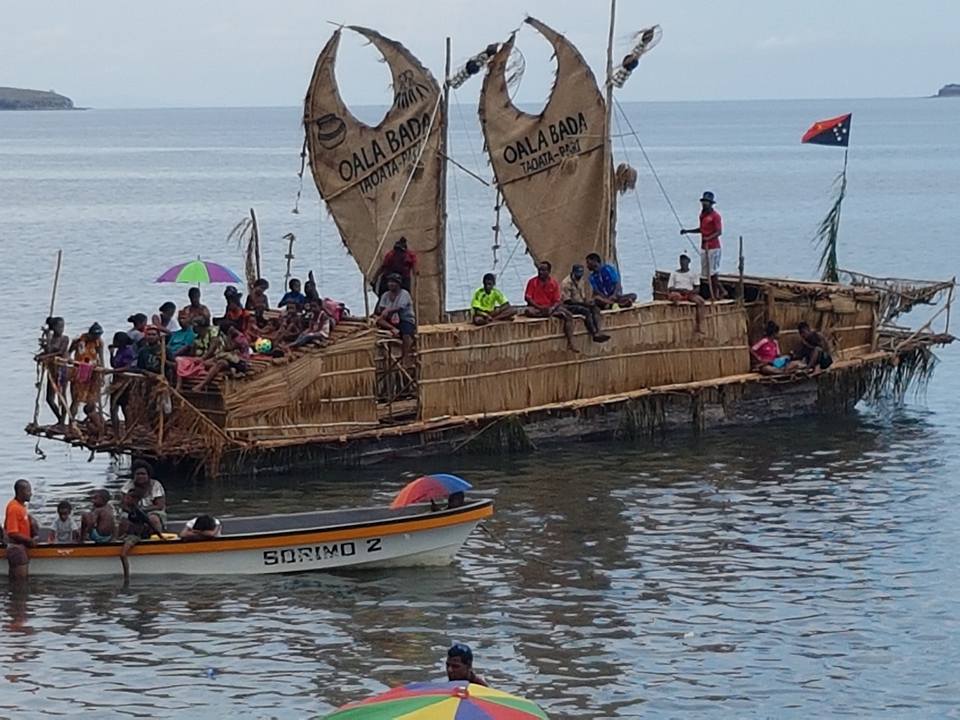
According to oral history, the first sailing trip was led by an Edai Siabo of Boera village. Siabo was said to be inspired by a sea spirit after a fishing trip. With this inspiration, he and his henchman built a lagatoi (double hulled canoe) and made the first trip to the Gulf coastline.
This trip and subsequent trips were necessary because during these times there was usually drought along the Motuan coastline. Return trips brought a bountiful of sago to last throughout this drought. The actual trade would take only a few days however the return trip usually took place after 2 to 3 months.
During this long wait repairs are done on the canoes and relationships are strengthened among the traders. As a result of this long period of time away from home, it causes uncertainty back home - resulting in wives and partners of crewmembers re-marrying.
The return trips are usually arduous and dangerous as the wet winds brings with it storms. Lives are often lost also during these trips.
The last of such trading trips was in the late 1950's where a Lagatoi sank just off the coast of Boera village. Several lives were lost in this mishap.
The colonial administration then banned trading trips as such. Today access to better transport system such as motor boats, airplanes and road links also contributed to the end of such trips.
Preparation for the trip involves:
Building of double hull canoes called lagatoi's by the menfolk.
Clay pot making by the women.
Items for Trade:
Toea (Motuan shell money)
Sago (Main item) & betel nuts by Gulf villagers - additional items includes logs for the Lagatoi's.
Length of Trips
May take a week to travel (East Wards)
May Take 2 to 3 months before returning - due to repair or building of additional hulls to cater for additional cargo.
Also wait for the change in the wind i.e. West Winds.
THE HIRI MOALE
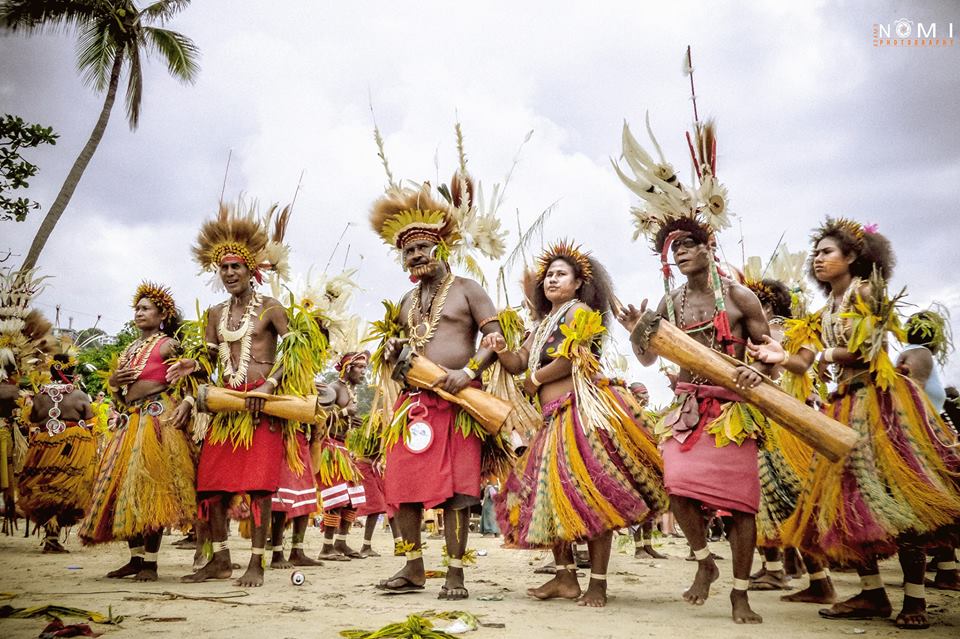
Today the Hiri Festival is a celebration to mark the Hiri trading pilgrimages. It is held annually to coincide with the Independence Day celebration on September 16th.
There is always great joy and celebration upon the successful return of the Lagatois, hence the Hiri Moale - the name given to today's modern day celebrations.
THE HIRI HANENAMO
Hanenamo is a young woman who display the right attitude, manners and behaviour and whose character is respectful of the such title. She observes the rules, norms and laws of her society bringing happiness to her family.
It is from this original concept that the modern day Hiri Hanenamo (Queen) competition is derived from. Infact the wife of the first Hiri pioneer Edai Siabo was the first Hiri Hanenamo for her display of commitment and dedication to the rituals vital to ensuring a successful Hiri Trading voyage.
Hiri Hanenamo is not attributed to beauty alone, beauty is just one aspect. Elegance and grace in carrying out duties and during performances is also considered. Approval and appraisal by village elders honours such a person.
Today many of these components of village life are taken into consideration by the judges during the Hiri Hanenamo Quest staged during the festivities.
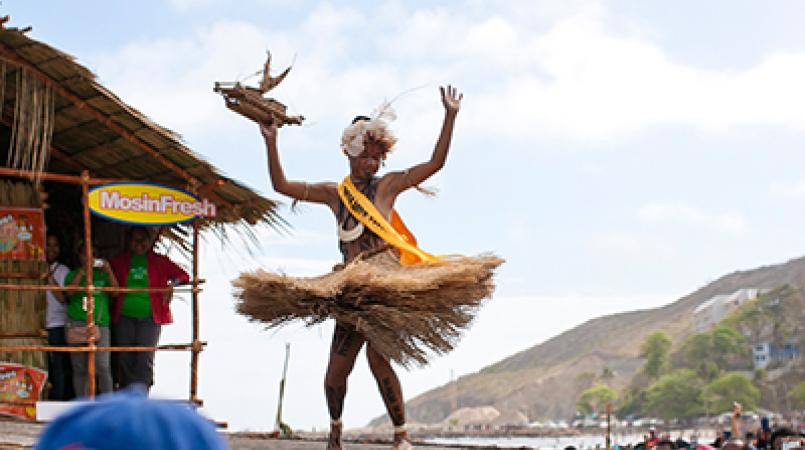
A young girl is declared Hiri Hanenamo if she can display the appropriate traditional qualities to the judges. Authentic tattoo designs, bodily decoration and ornaments according to the background of the woman's village is also taken into accounts.
Terminologies:
Hiri - Trading route and voyage taken by the motuan sailors.
motuan word for celebration, happiness or joy
Hanenamo - A young motuan woman who abides by all customary expectations within the community she resides in.
HIRI HANENAMO - MOTU-KOITABU TRADITIONAL BEAUTY QUEST
One of the great spectacles of the Hiri Moale Festival is the Hiri Hanenamo Quest where selected young women will parade in front of a crowd of spectators, covered in tattoos, swaying their grass skirts and calling out a lagatoi or double-hulled canoe used in the Hiri Trading days.
They will attire only in their finest dancing finery and will be subjected to questioning, judging, marvel, admiration and basically, great attention.
The Hiri Hanenamos who are these beautiful young ladies contesting the Hiri Hanenamo Quest, undoubtedly become a draw card of every festival.
The contest is as old as the festival itself and its inclusion is not because of modern influences. The quest traces it's roots to an age-oldMotuan tradition of social ethnics and rules associated with Hiri.
In the days of the sailing Lagatoi, the women's role in ensuring a successful Hiri voyage was just as important as the males who took the trip. Young women together with their mothers and elder female relatives would stay indoors during the length of the trip. They were not allowed to cut or comb their hair, and would learn Motuan customs while their bodies were being tattooed. These young women could only eat vegetables and only with chopsticks known as diniga.
When the lagatois returned the girls were allowed out into the sunshine for the first time in many months. Their skin would be very pale, after a long period of time, in the absence of sunlight and so their bodily tattoos would be quite significant. The young women would wash themselves thoroughly, dress in new grass skirts and take their place in front of all the other women singing hehona (songs) to welcome the lagatoi home.
These social rules require a great deal of personal discipline and so a young village woman who displayed such respect for her traditions was honoured with such a title the Hanenamo.
The addition to this aspect of the Hiri, it also reminds us the importance of women and their role in ensuring a successful trade. Designed into a competition, the Hiri Hanenamo Quest has succeeded in encouraging young women to take an active interest in their traditional history and culture.
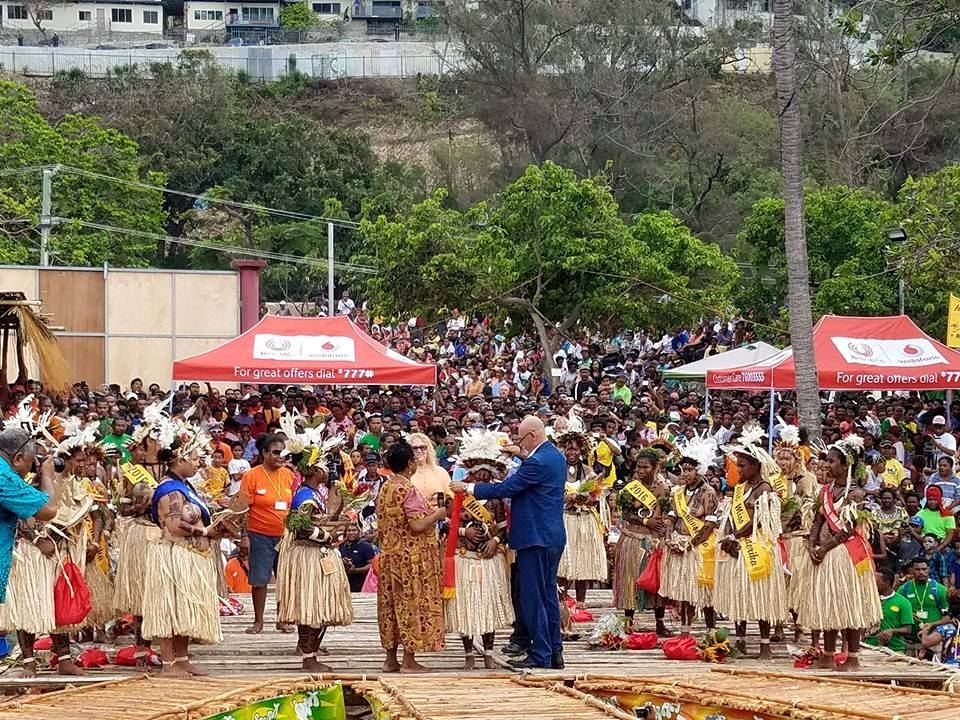
The contest usually allows 20 contestants every year. The "Hiri Hanenamo" is the principal title. In addition there are other titles such as; theHiri Hanenamo Runner-up and the Miss Hetura (means Friendship).
Carried out by a panel of judges chosen at random, the modern Hiri Hanenamo is chosen for her poise and deportment in dance, the care with which her tattoos and clothes have been made, as well as her knowledge of traditional customs.
This is a must see for the first time visitor to Port Moresby during this time of the year.
To view the pictures of Hiri Hanenamos, click here: Photo Gallery of Hiri Moale Festival
Source: NCDC